BLOG
Dive into a world of insightful articles, thought-provoking stories, and expert tips on [insert main topic or theme of the blog]. Whether you’re here for inspiration, knowledge, or a little fun, we’ve got something for everyone. Stay updated, engage with us, and let’s explore new perspectives together!

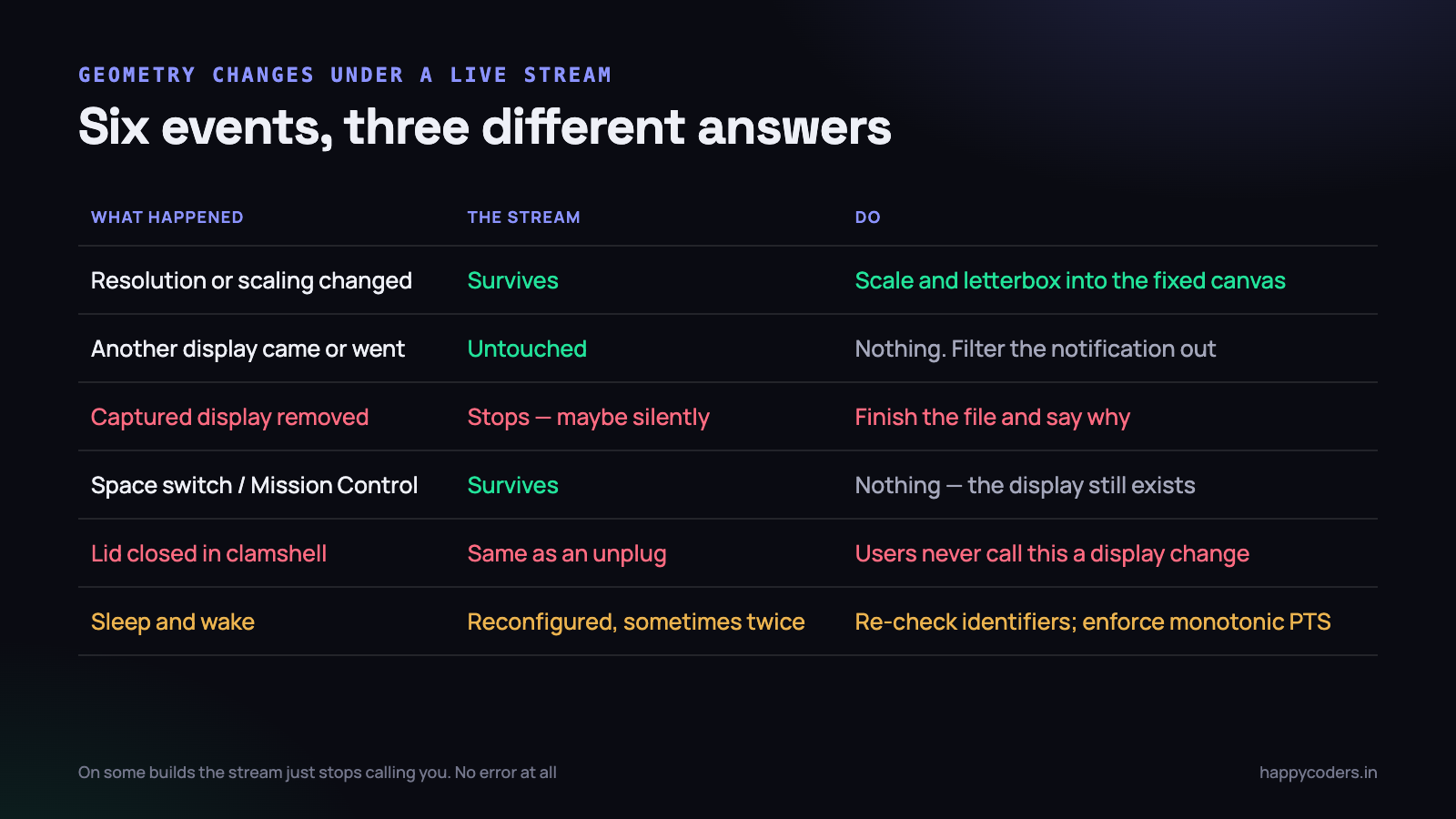
A monitor is unplugged forty minutes into a recording. What ScreenCaptureKit does, why the writer must keep a fixed output size, and how to fail with a playable file instead of a corrupt one.
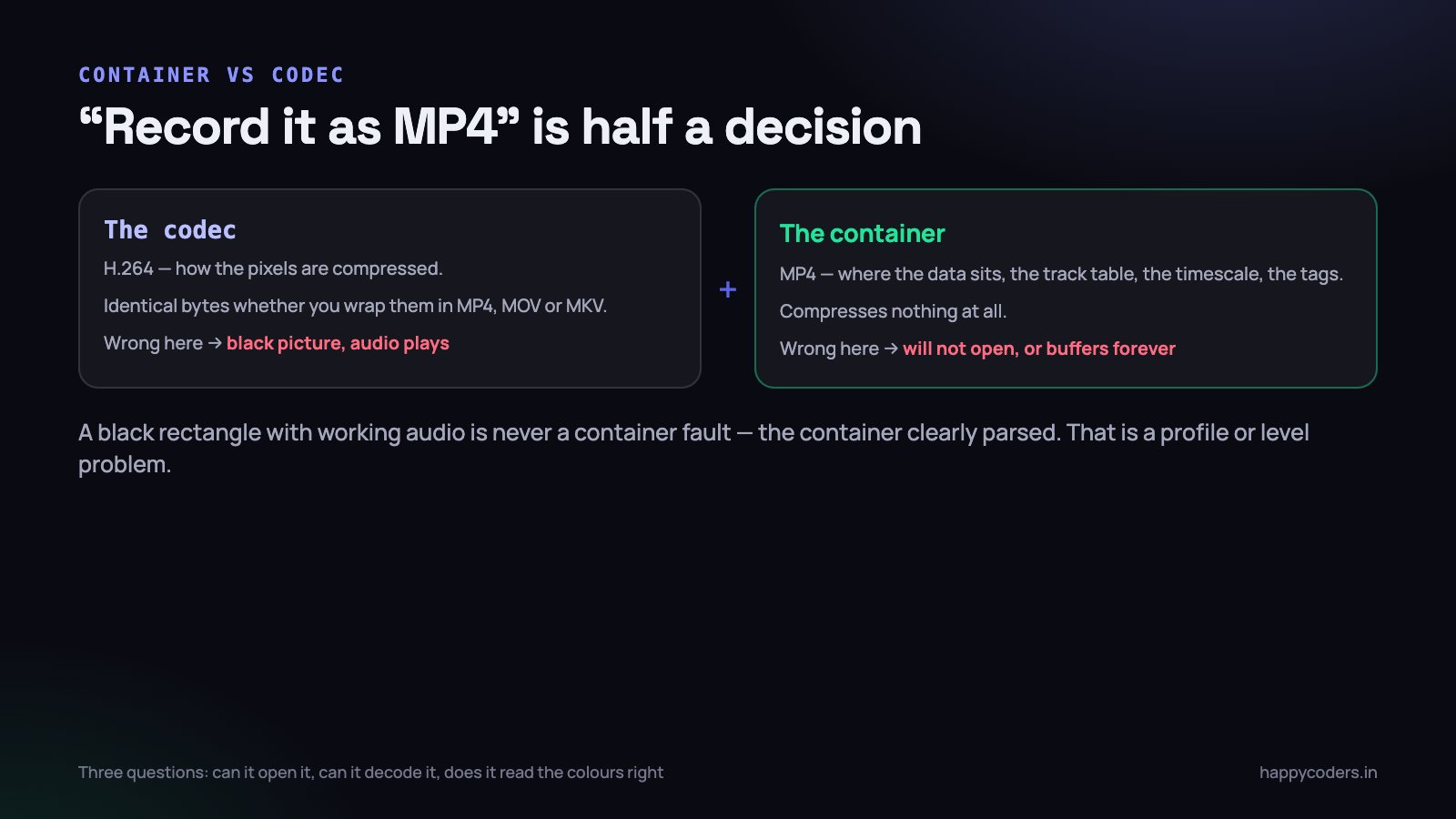
A recording that plays on your Mac and fails on the client’s laptop. What the container decides, why moov placement matters, and how to write a compatible MP4 from AVAssetWriter.
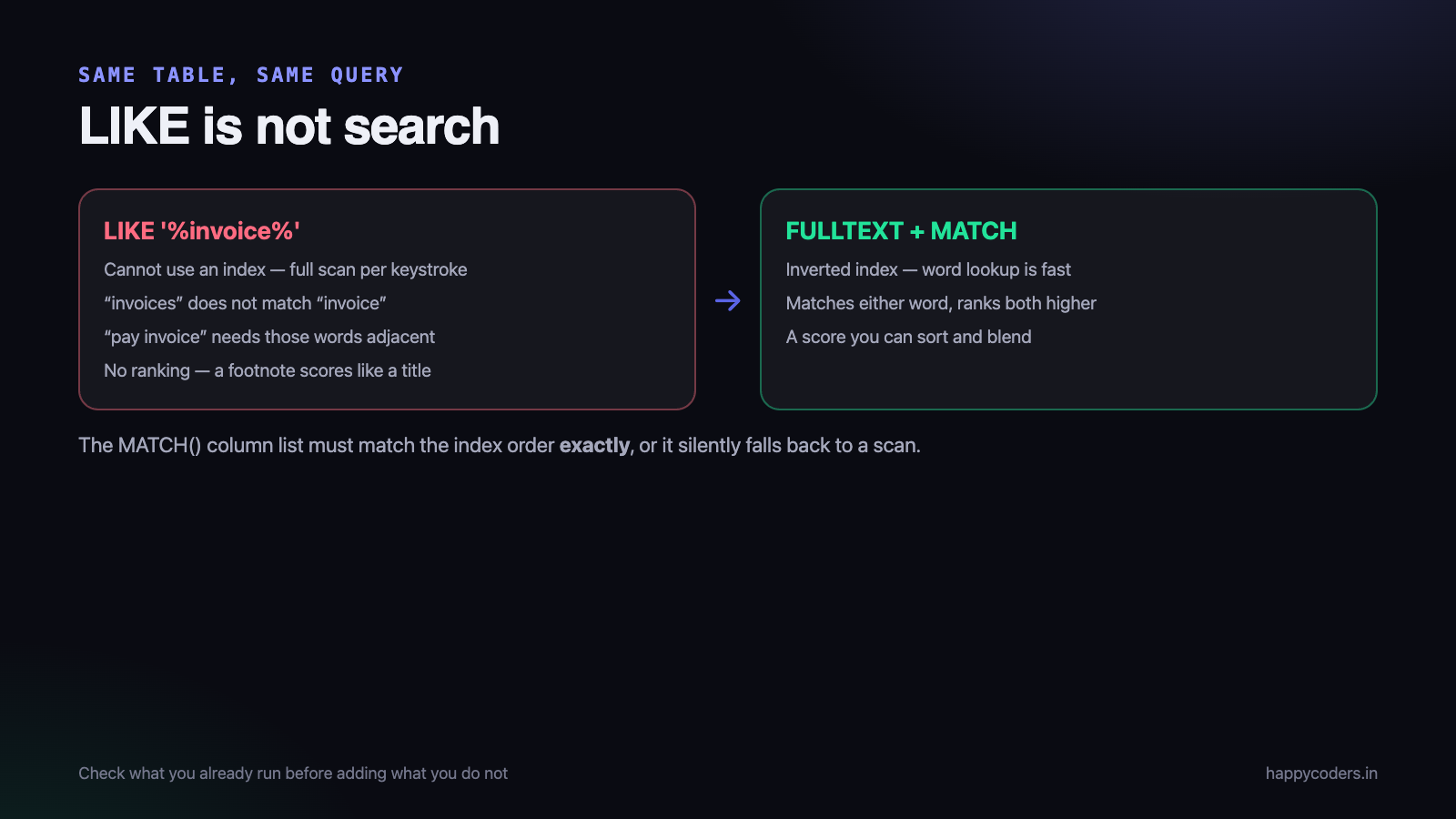
Before adding a search cluster to your stack, find out whether the database you already run is enough. What MySQL full-text does well, the four defaults that surprise people, and when you genuinely need something else.
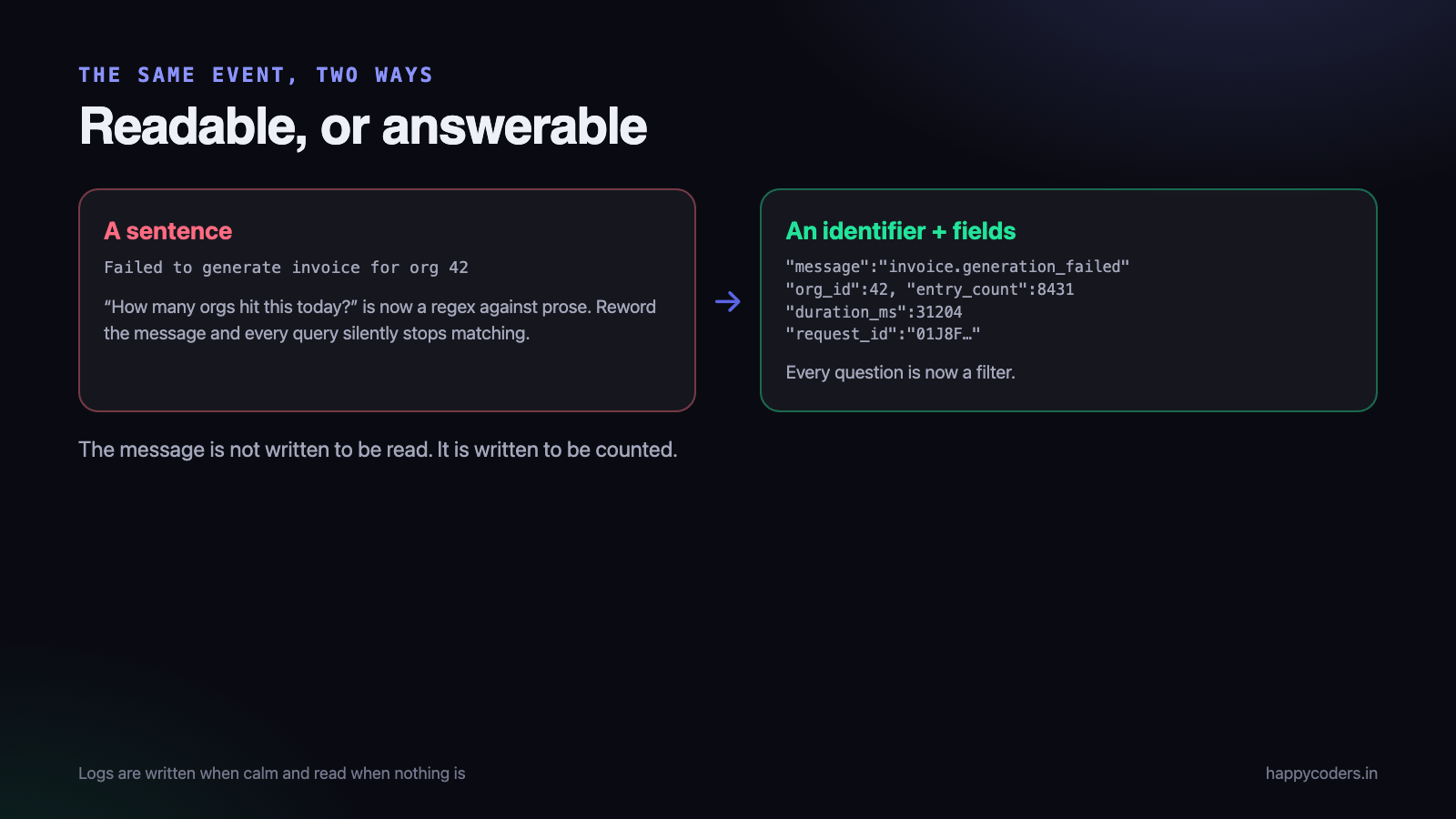
Log lines written for a human reading one are useless when you need to find forty. What to log, what never to log, and the request id that turns a scattered incident into one query.
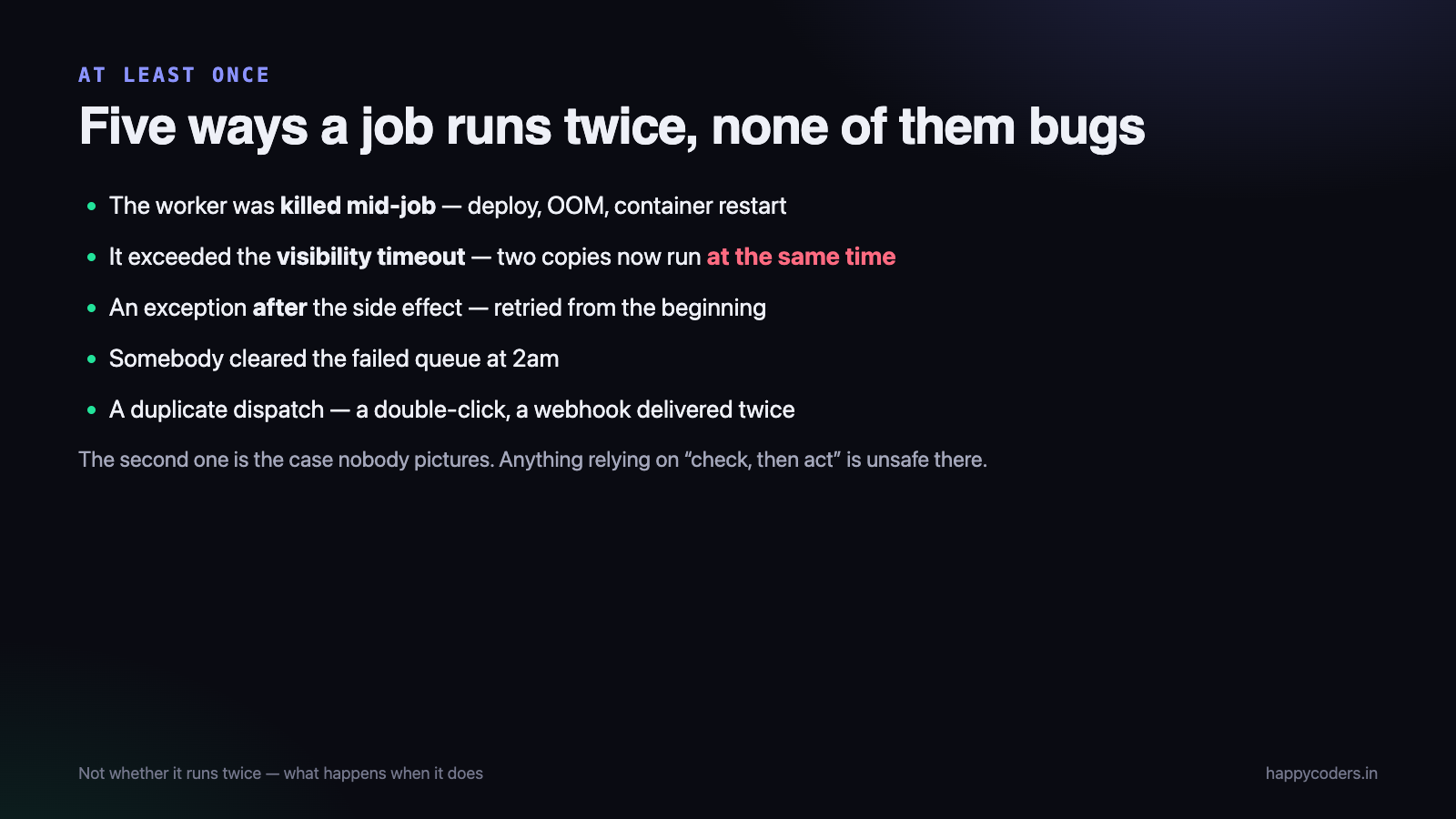
Every queue delivers at least once, which means every job runs twice eventually. How to make a job safe to repeat, the four patterns that work, and where a lock is the wrong answer.
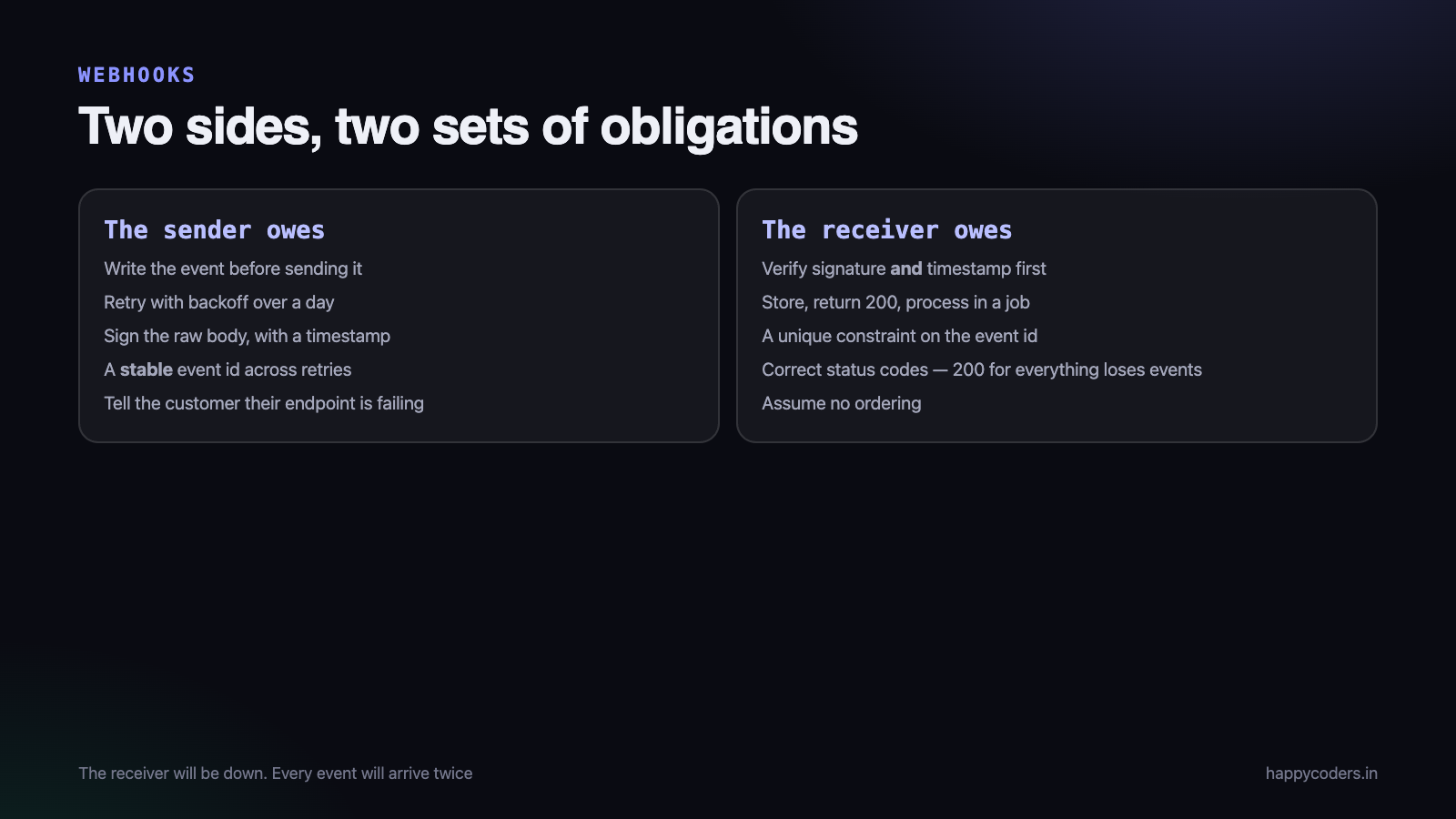
A webhook is an HTTP call to somebody else’s unreliable server. What the sender owes the receiver, what the receiver owes the sender, and the outbox pattern that stops events vanishing.
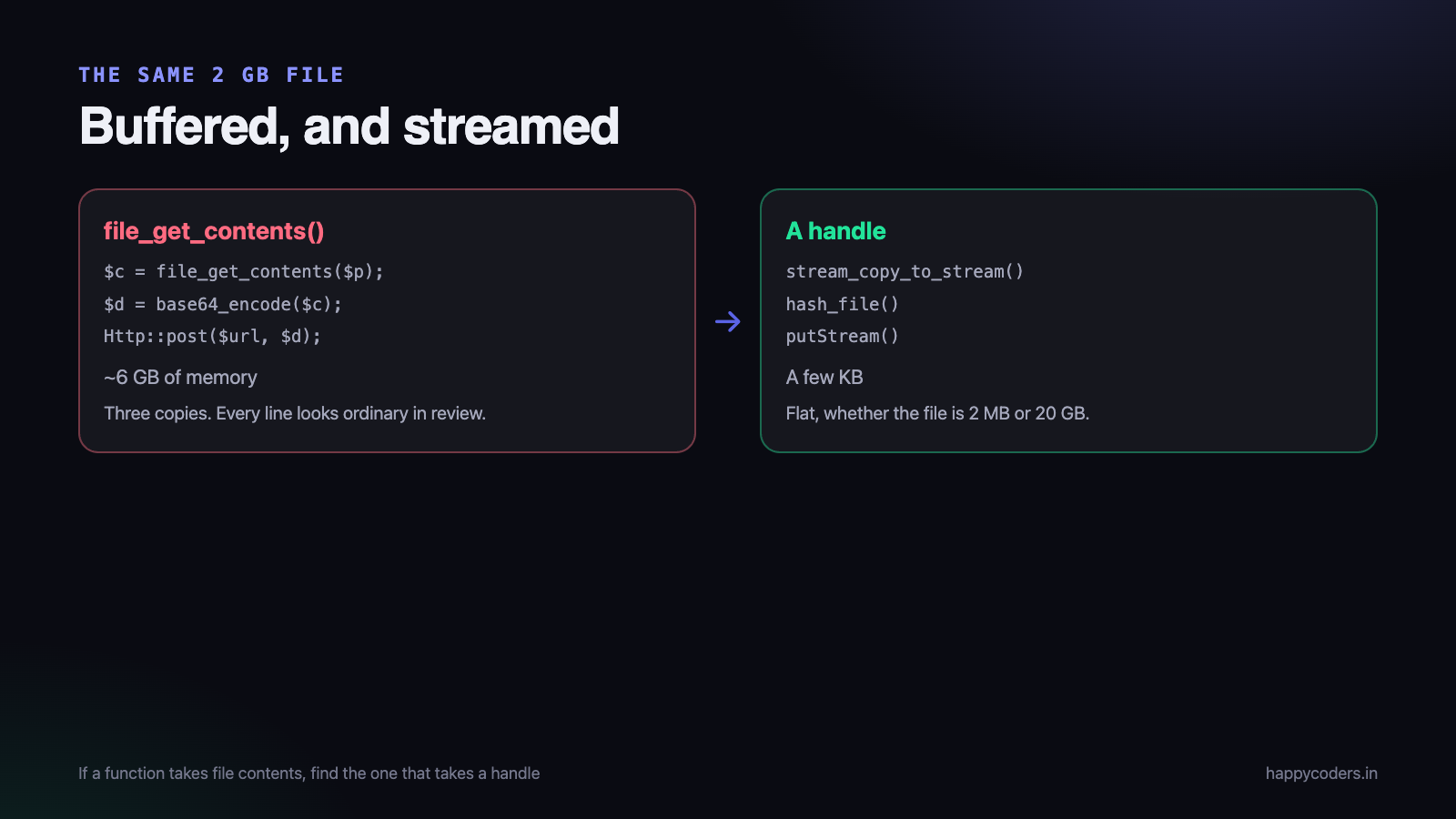
A 2 GB upload should not need 2 GB of memory. Why PHP buffers by default, how to stream to disk and to object storage, and what chunked and resumable uploads actually require.
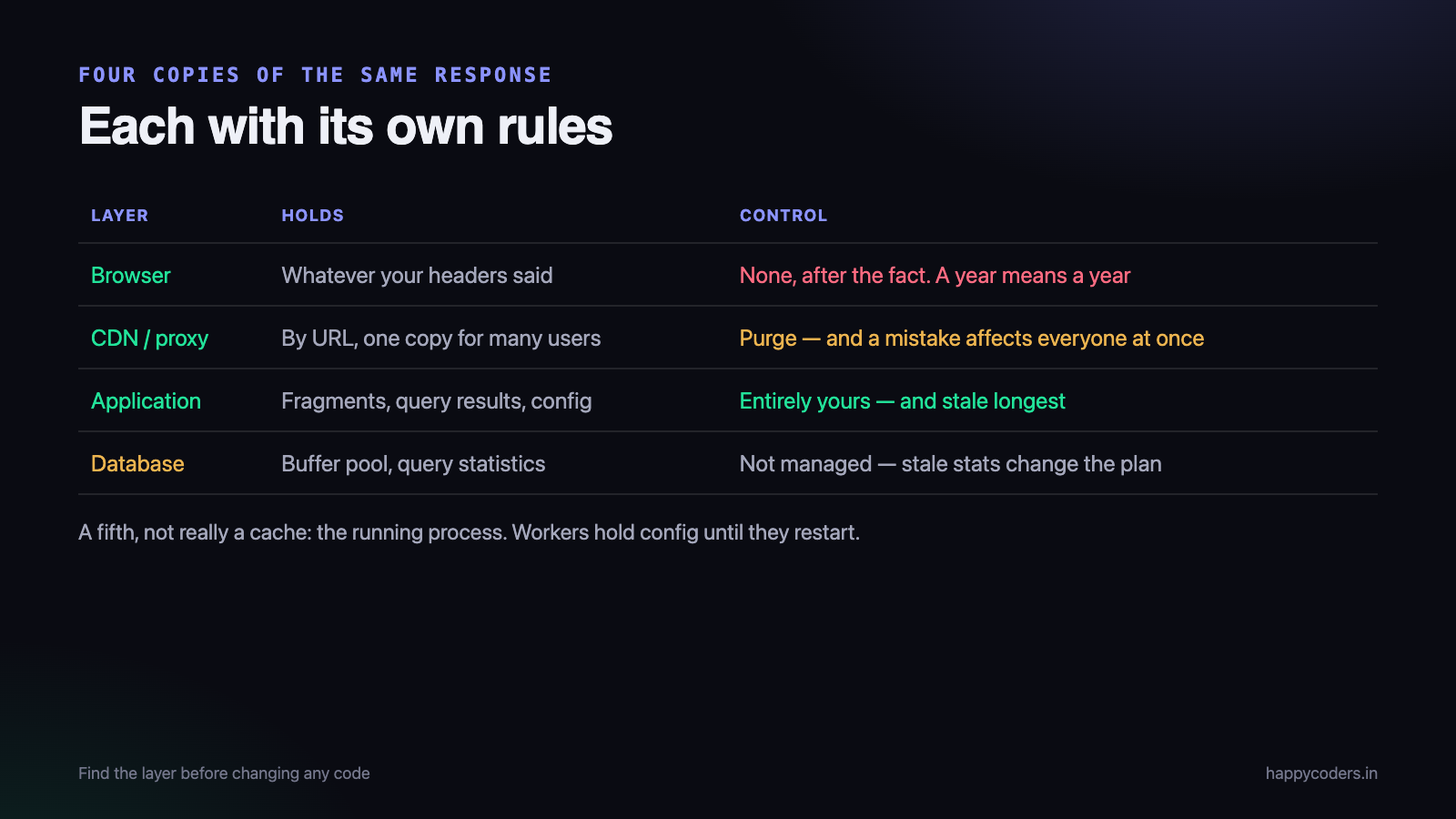
The browser, the CDN, the application and the database each hold their own copy. When a change does not appear, this is how to find which layer is serving the old one — and how to invalidate it properly.
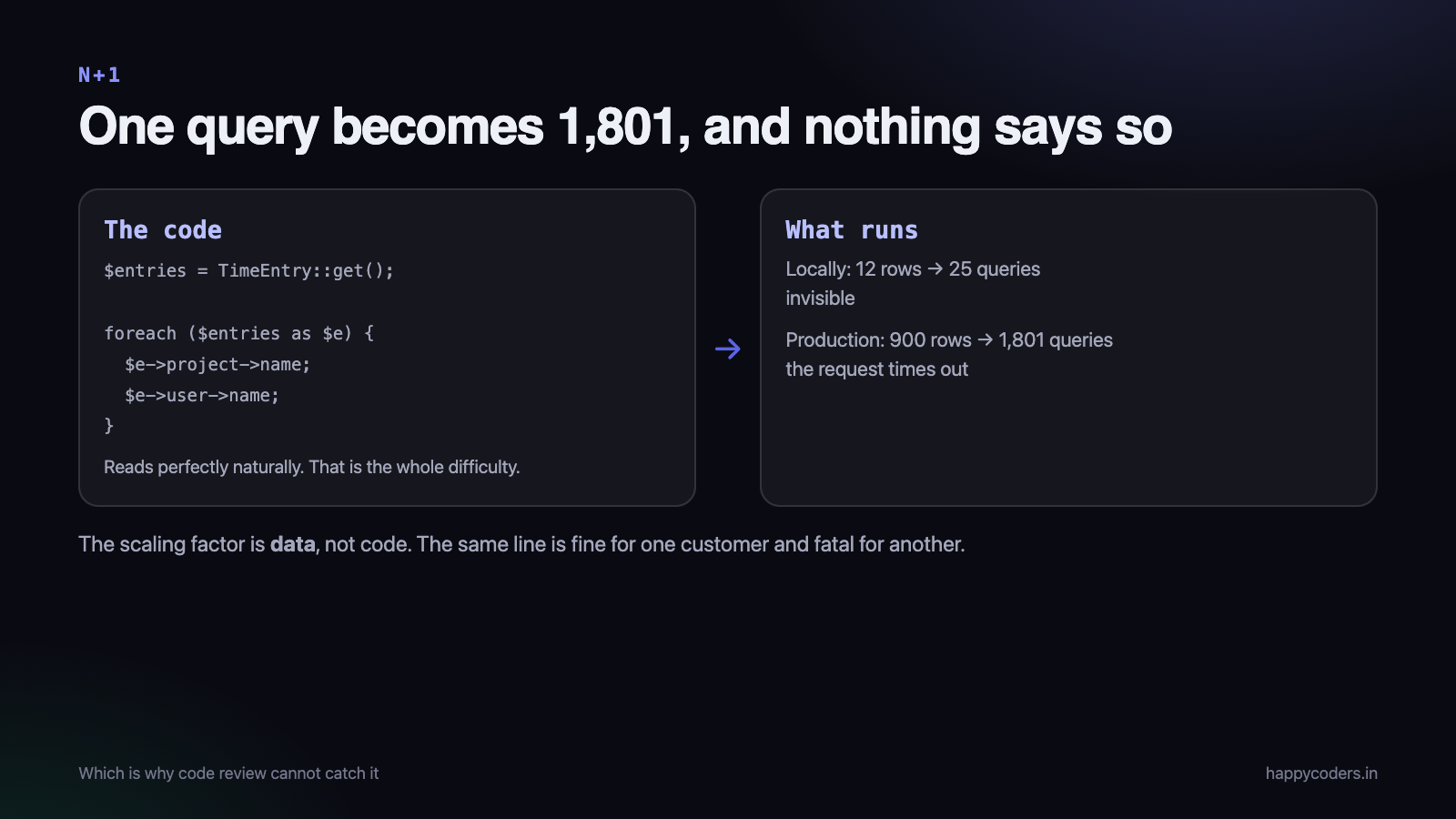
The bug that is invisible on seeded data and fatal on a real customer. How to detect N+1 queries automatically in tests and in development, the four fixes, and the ones eager loading does not solve.
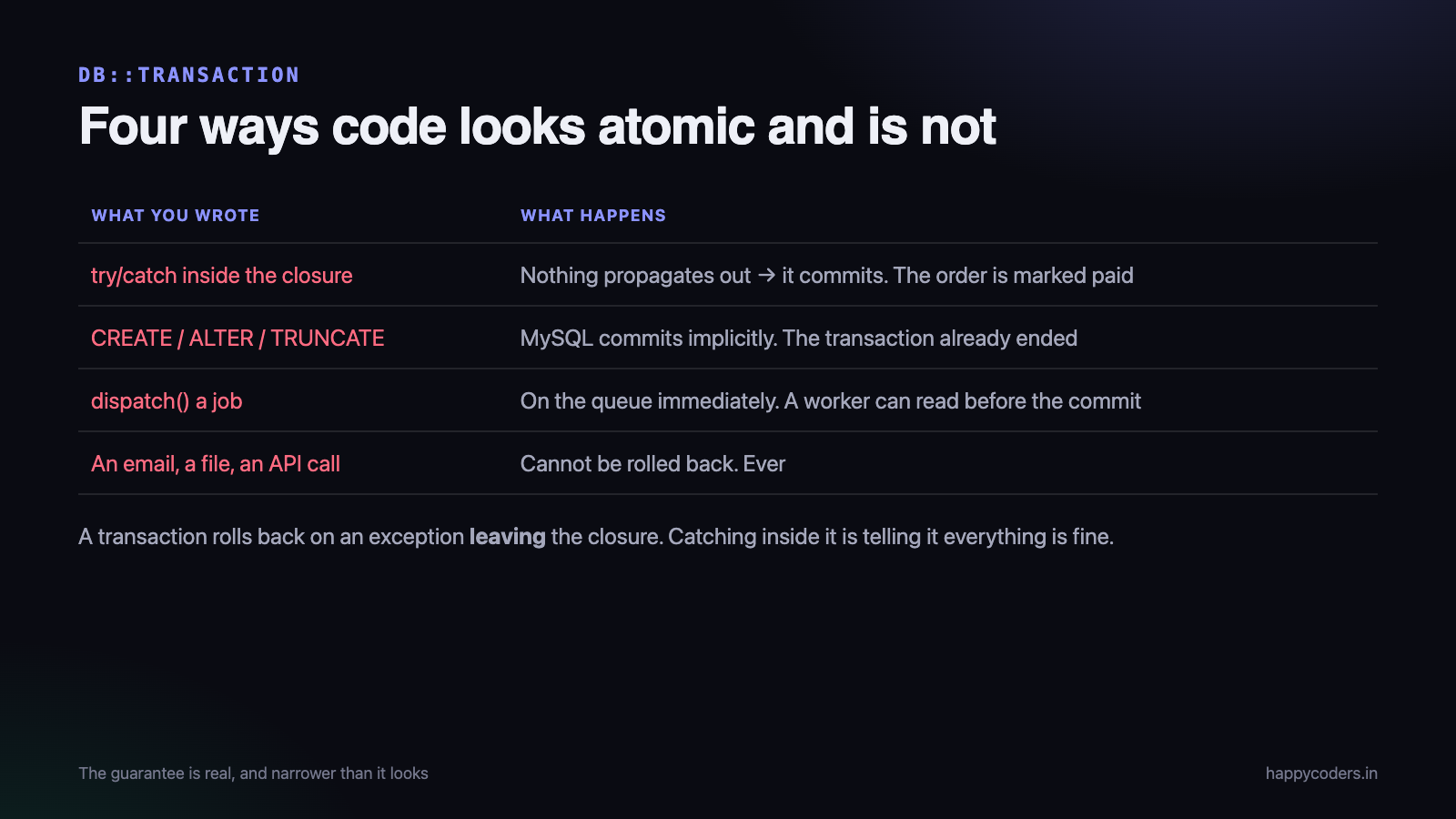
Wrapping code in DB::transaction does not always give you atomicity. The DDL that commits behind your back, the queued job that runs too early, the swallowed exception, and the nested transaction that is not one.